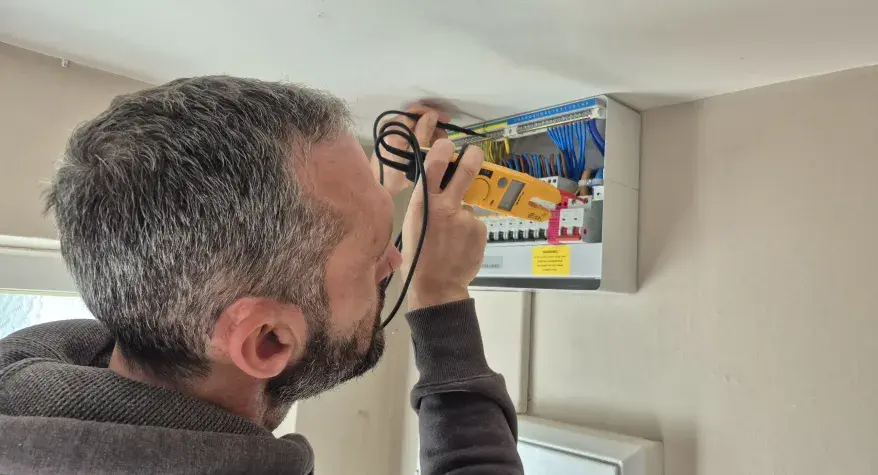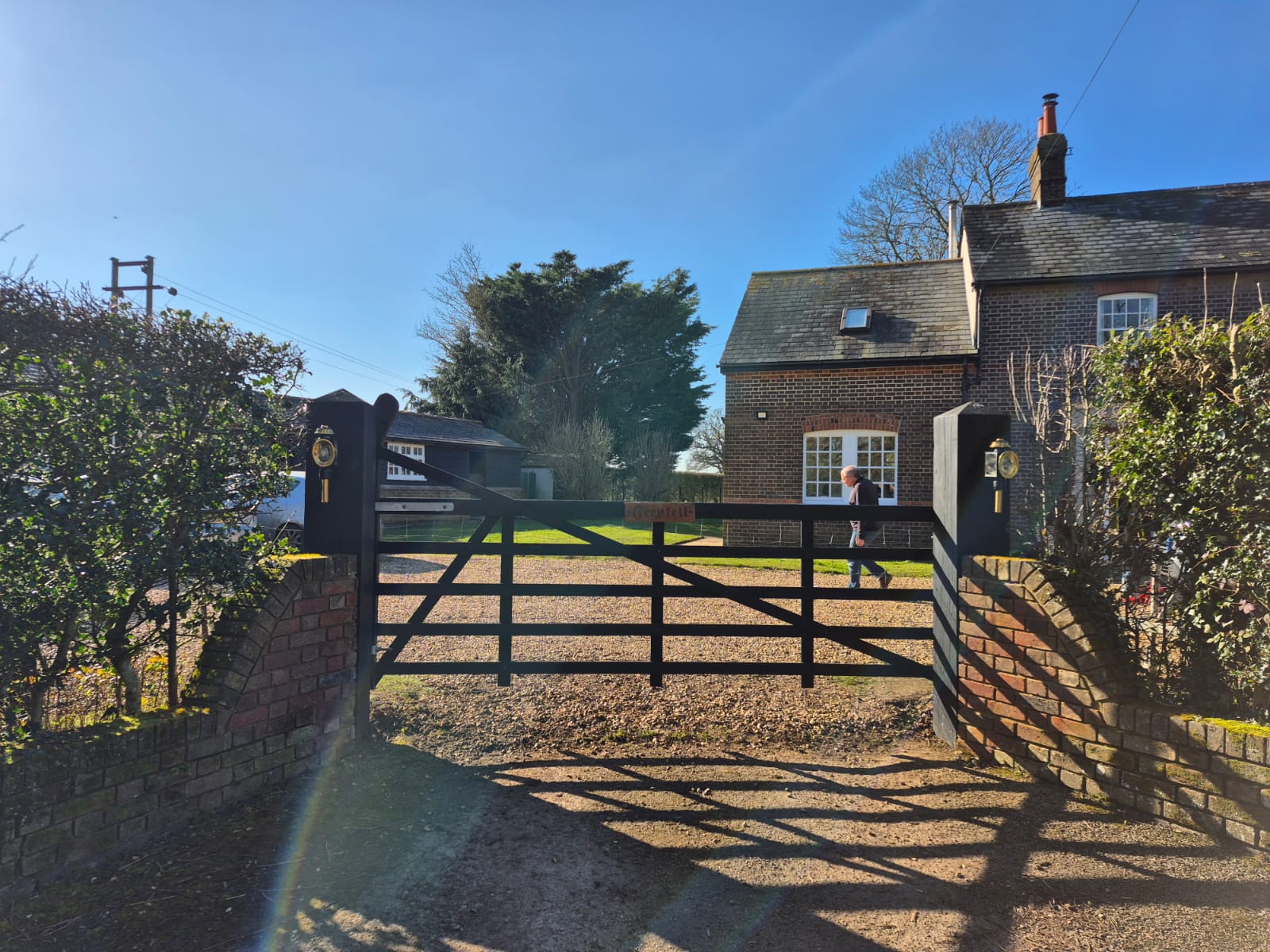
Last month, I installed a set of outside lights for a homeowner in Stevenage whowanted to improve both the visibility and the look of his front entrance.
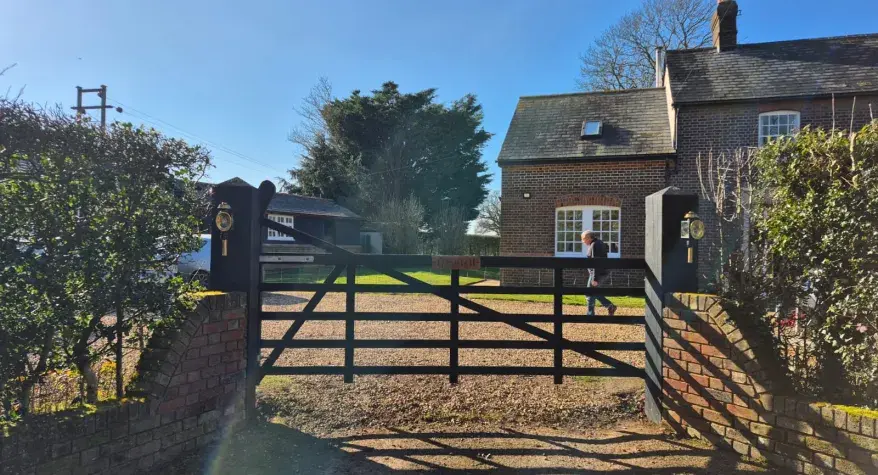
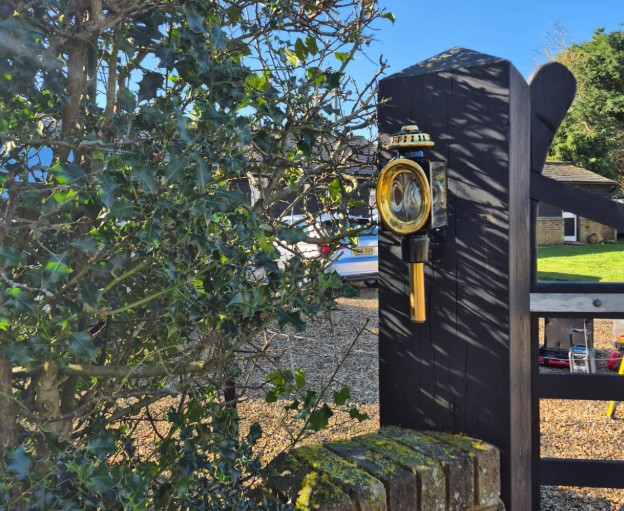
Last month, I installed a set of outside lights for a homeowner in Stevenage who wanted to improve both the visibility and the look of his front entrance. He had chosen some traditional coach lights for the front door and wanted matching fittings installed on both sides of his timber driveway gate.
The main challenge on this job was power. The gate had no electrical supply nearby. To solve this, we ran a 20-metre length of steel wire armoured cable directly from the consumer unit in the garage. We dug a trench across the garden to bury the cable to the required depth, laying high-visibility electrical warning tape directly above the run before backfilling so nobody hits it with a spade down the road.
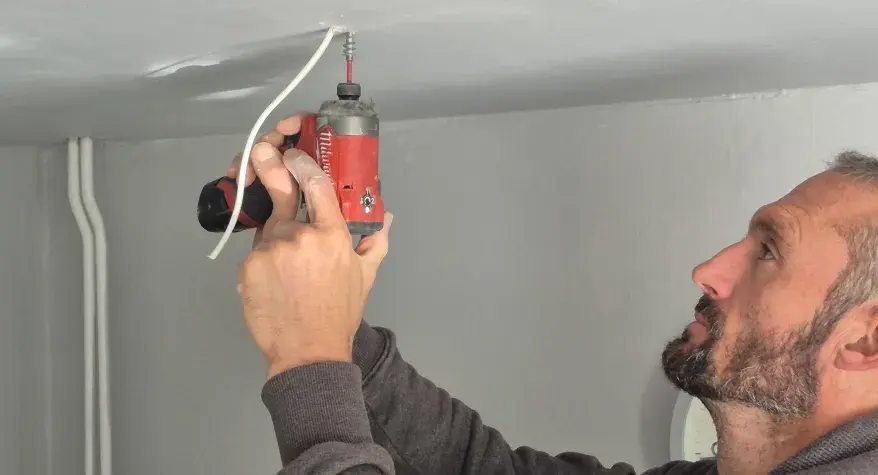
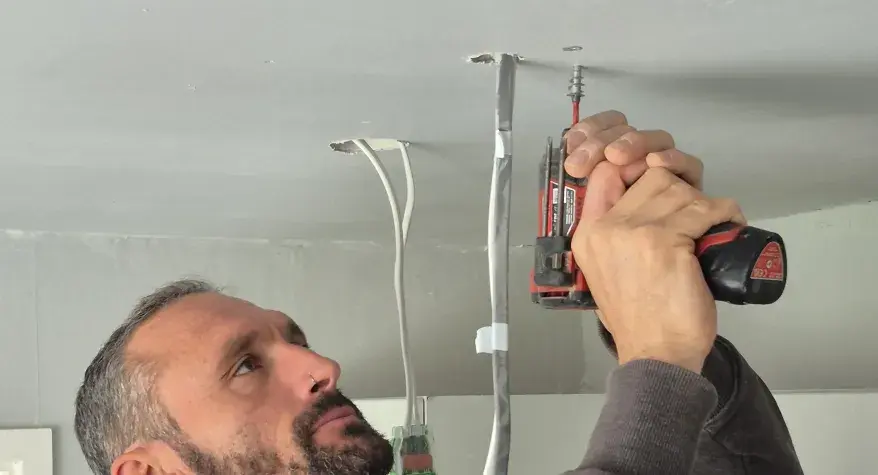
At the entrance, we terminated the armoured cable on one side of the entrance in a weatherproof adaptable box. Running power to the opposite post required drilling a clean channel through the wooden gate post to keep the wiring completely concealed and protected from the weather. Once the cable was through, we mounted the coach lights securely to both posts.
Controlling the lights was just as important as the wiring run. The customer wanted the lights to turn on automatically at nightfall, but he also wanted the freedom to switch them on manually from inside the house.
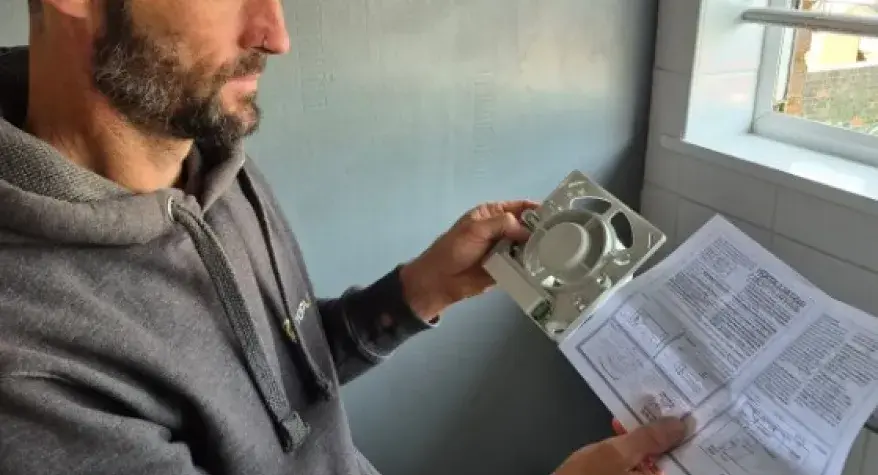
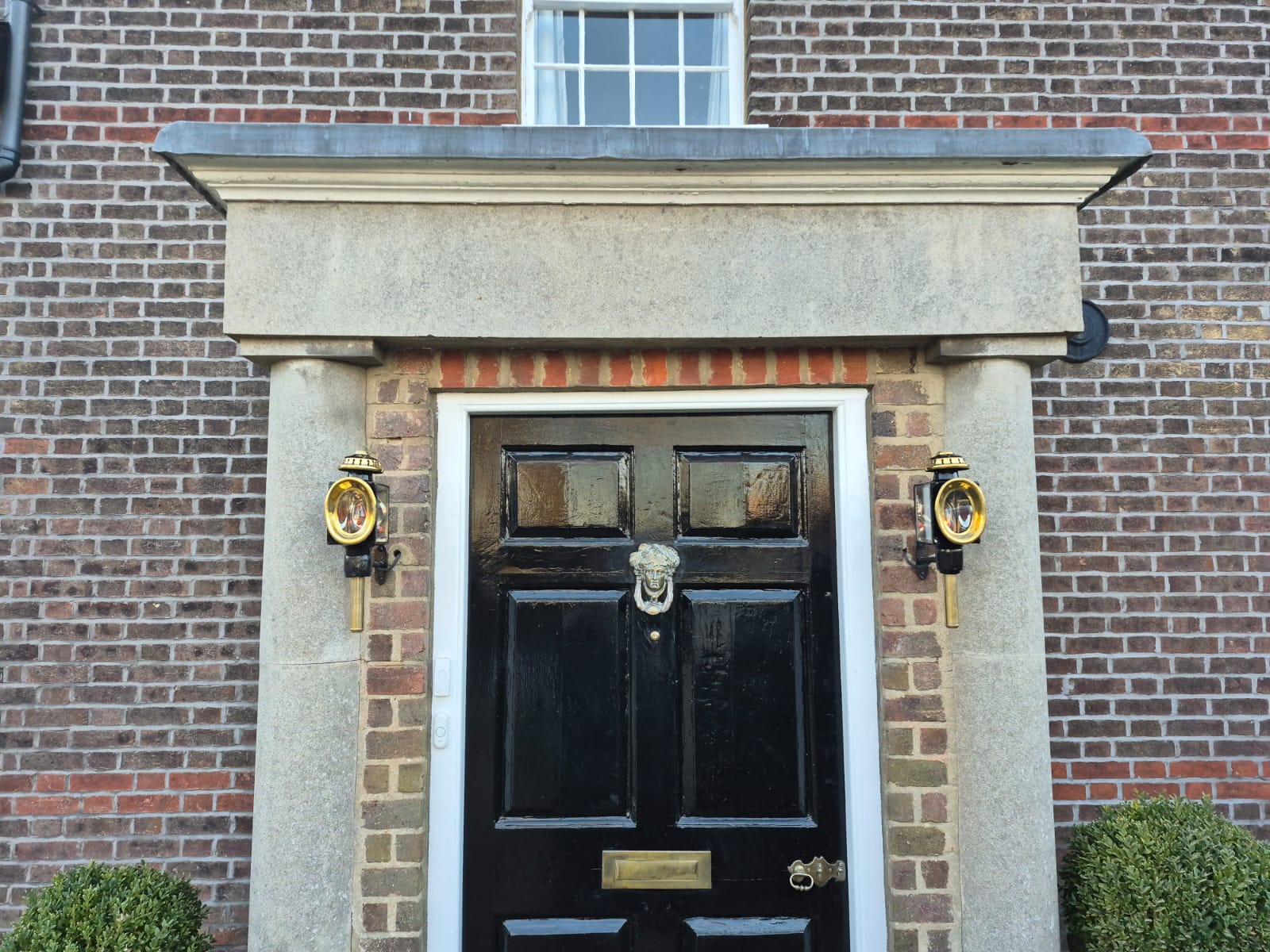
To achieve this, we mounted a dusk-to-dawn sensor on the exterior garage wall to manage the daily cycle automatically. For manual control, we fitted a Quinetic receiver inside the adaptable box at the gate and handed the customer a wireless Quinetic switch for his hallway. The switch has a 30-metre range and requires no batteries or chasing through internal walls, allowing him to turn the gate lights on whenever he wants. We then finished the job by removing the tired existing lights at the front entrance and replacing them with matching new fittings.
What to Plan When Adding Garden and Feature Lighting
Many properties across Stevenage, from older council-built houses to brand-new housing estates, leave the factory line without any outside lighting or external power sockets. When planning garden lights, extra outside feature lights, or power for outbuildings, keeping a few practical rules in mind saves money and hassle later.
Avoid cheap fittings that fail after one season
Cheap outdoor fittings bought online rarely survive a British winter. Thin metal casings rust quickly in damp air, and weak rubber seals let rainwater penetrate the terminals. You end up replacing them within twelve months. Investing in quality fittings made from cast aluminium, marine-grade stainless steel, or solid brass protects your installation against heavy frost and rain.
Choose warm white light for residential spaces
Warm white bulbs (between 2700K and 3000K) look significantly better in an outdoor living space. They bring out the natural tones of brickwork, timber gates, and greenery. Cool white or blue-toned LEDs often feel clinical, glaring, and overly harsh on a home exterior.
Distinguish between feature lighting and security lighting
Feature lights provide subtle, continuous accent lighting to guide you along a path or highlight architectural details. Security lights, on the other hand, should sit on independent sensors to illuminate wide driveways or back gardens when unexpected movement occurs. Blending the two jobs into a single fitting rarely gives you the right result.
Frequently Asked Questions
Can you take power from any nearby electrical point?
It depends entirely on your existing consumer unit and circuit loads. Outdoor circuits require proper RCD protection to comply with current UK wiring regulations. While we can sometimes extend an existing ground-floor circuit, running a dedicated feed from the fuse board or garage distribution board is often the safest and cleanest approach.
Will these installations survive harsh winters?
Quality fittings with an IP rating of IP44 or higher handle standard rain and splash zones, while open, exposed gate posts benefit from IP65 ratings. When cables are terminated inside properly sealed, weatherproof adaptable boxes, moisture cannot track into the connections.
What is the difference between floodlights and perimeter lights?
Floodlights cast a broad, powerful beam across a large area, usually triggered by an infrared sensor to deter intruders. Perimeter lights produce a gentle, downward wash along boundary walls, fences, or gate pillars to illuminate borders safely without blinding anyone.
Practical Electrical Work Across Stevenage
My name is Marco, and I run Solaris Contracts Ltd. I have been working as an electrician for more than 10 years, carrying City & Guilds qualifications alongside full NAPIT registration and TrustMark accreditation.
When you get in touch, you speak directly to me. I answer my own phone without call centres, I provide same-day responses, and I tidy up thoroughly when the work is finished. I take before and after pictures on every job so you can see exactly how your cables and fittings have been installed, which is why our customers consistently leave five-star Google reviews.
If you are planning outside lights in Stevenage, adding outside sockets, or upgrading your garage power, call me directly on 07982678360 to discuss what you need.