The Importance of Emergency Lighting in Retail and Warehouse Environments by Solaris Contracts Ltd, Letchworth
Emergency Lighting in Retail and Warehouse Environments
Understanding Emergency Lighting in a Commercial Premises: What You Need to Know
When it comes to safety within a commercial premises, we at Solaris contracts Ltd in Letchworth are noticing that emergency lighting is often overlooked—until it’s needed. In the event of a power failure, fire, or any situation where normal lighting fails, emergency lighting becomes essential for guiding occupants to safety. Whether you’re responsible for an office, retail unit, factory, or multi-storey building, it’s your duty to ensure the emergency lighting system is compliant, reliable, and properly maintained.
What Is Emergency Lighting?
Emergency lighting is a self-contained or central battery-powered system designed to illuminate escape routes, safety equipment, and high-risk areas when the primary lighting system fails. It helps prevent panic and ensures people can evacuate safely and quickly.
In the UK, emergency lighting is governed by several standards and regulations, including:
- BS 5266-1:2016 – the main code of practice for emergency lighting systems
- The Regulatory Reform (Fire Safety) Order 2005 – which places responsibility on the “Responsible Person”
- Building Regulations – particularly Approved Document B
Types of Emergency Lighting
Emergency lighting within a commercial premises usually falls into four main categories:
1. Emergency Escape Lighting
Provides illumination for people to exit the building safely. This includes:
- Corridors
- Staircases
- Fire exits
2. Escape Route Lighting
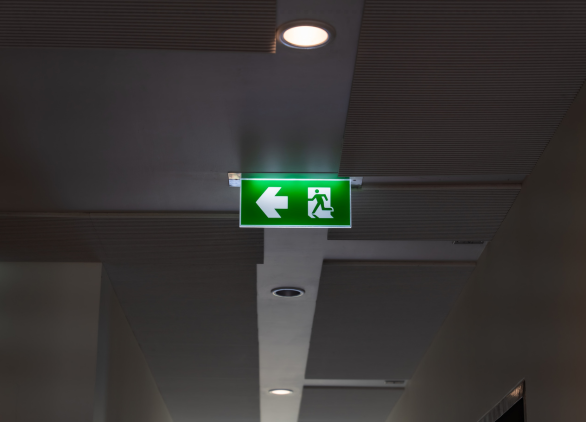
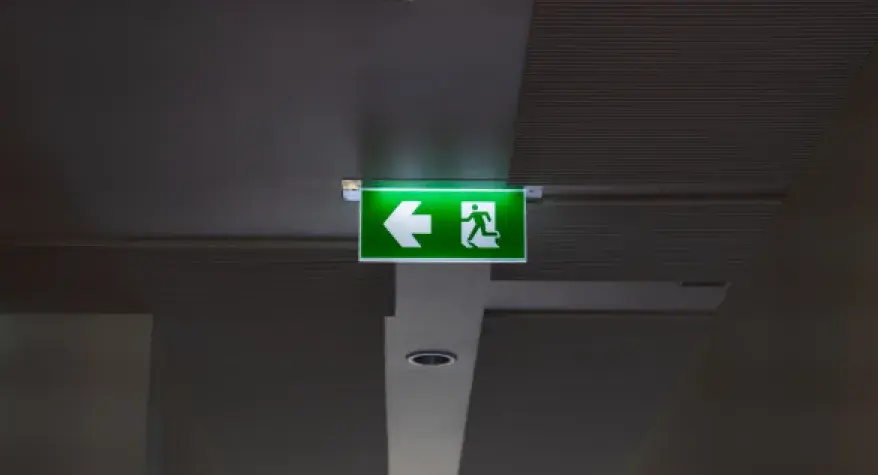
Ensures escape routes, signage, and directional guidance remain visible.
3. Open-Area (Anti-Panic) Lighting
Used in larger spaces such as open-plan offices, warehouses, or factory floors to prevent panic and guide occupants towards escape routes.
4. High-Risk Task Area Lighting
Illuminates areas where machinery or hazardous processes are in use, allowing employees to shut down equipment safely before evacuation.
Why Is Emergency Lighting So Important?
Emergency lighting isn’t just a compliance requirement—it’s a critical life safety system. Power failures can happen unexpectedly due to electrical faults, fire incidents, severe weather, or even accidental damage. Without adequate emergency lighting:
People may struggle to find fire exits
- Panic is more likely to occur
- Injuries from trips, falls, or collisions increase
- Evacuation times become significantly slower
A well-designed system ensures people can remain calm and orientated during an emergency.
Where Should Emergency Lighting Be Installed?
Although every premises differs, emergency lighting is generally required:
- Along all escape routes
- Near fire-fighting equipment (e.g., extinguishers)
- At first-aid points
- In stairwells and corridors
- Outside final exit doors
- In high-risk work areas
- In lifts (where allowed)
- In plant rooms, switch rooms, and boiler rooms
A fire risk assessment should be used to determine the exact layout and requirements.
Testing and Maintenance Requirements
Emergency lighting must be tested regularly to remain compliant.
Typical test schedule:
Monthly functional test
A brief test to ensure each light operates correctly when mains power is removed.
Annual full discharge test
A prolonged test (usually 3 hours) to confirm the battery can maintain illumination for the required duration.
All tests must be logged in the fire safety logbook. Any faults should be rectified immediately by a competent person.
Choosing the Right System
Modern emergency lighting comes in several forms:
- Self-contained units – simpler installation, ideal for smaller premises
- Central battery systems – easier maintenance, used in larger buildings
- LED emergency lights – long-lasting, energy-efficient, and reliable
- Self-testing luminaires – reduce manual testing effort
Selecting the correct setup depends on building size, layout, usage, and budget.
Conclusion
Emergency lighting plays a crucial role in the overall fire safety strategy of any commercial premises. Ensuring your system is compliant, well-maintained, and suitable for your building helps protect staff, customers, and visitors in the event of an emergency.
Regular checks, proper installation, and adherence to UK standards are essential for staying legally compliant and keeping everyone safe.
We at Solaris Contracts Ltd Letchworthare here to help with your emergency lighting projects and maintenance.